Back to Index

Safety Vests

// materials
Mixed media
// Date
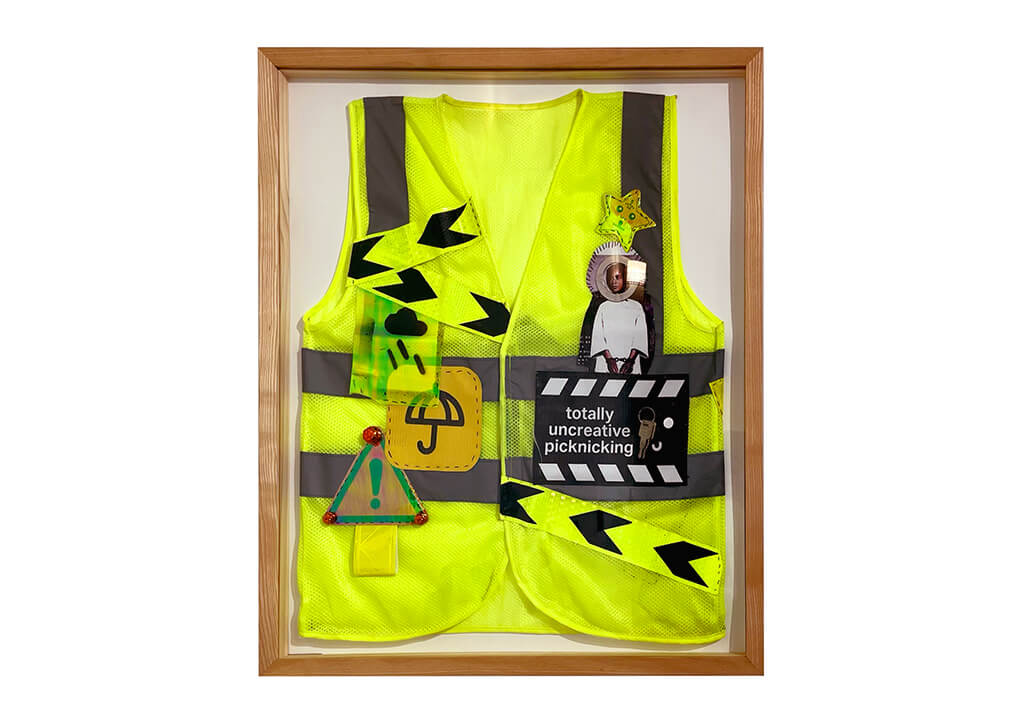
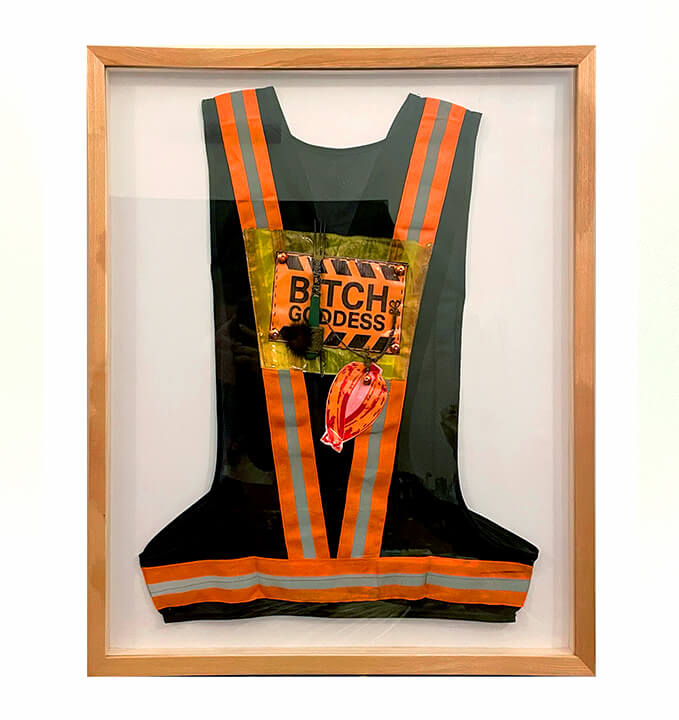
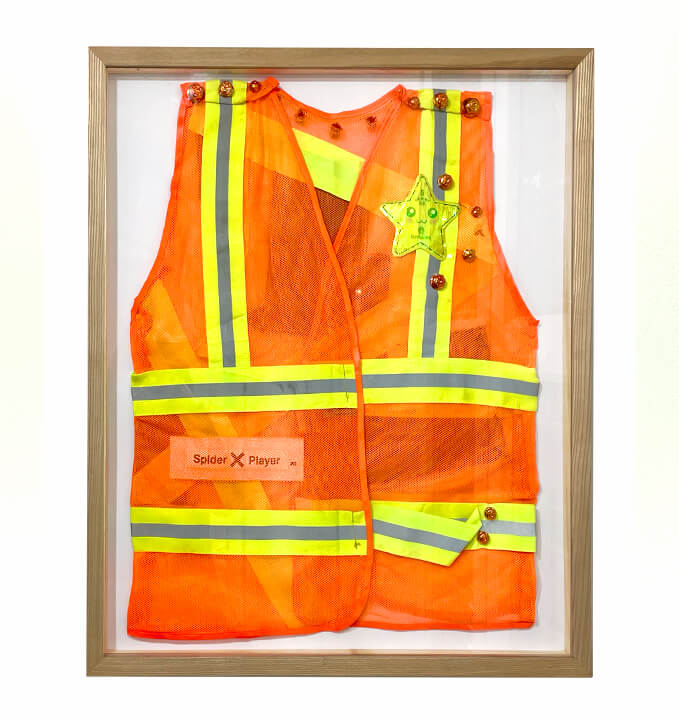
These three works use the safety vest as one of ZhouKe’s primary surfaces of identity. The vest is functional, visible, cheap, bureaucratic, and public. It marks a body as useful while allowing that body to disappear into the systems it serves. In ZhouKe, the uniform becomes a language before speech: a way of establishing role, visibility, labor, obedience, risk, and recognition. Across these instances, the vest is no longer only worn. It becomes a field for symbols, invented protest language, ratings, warnings, and coded identity. Its reflective surface belongs to the city, but its embroidery pulls it into the territory of myth, censorship, and absurd political imagination. ZhouKe’s body is formed through these signs, as if identity could be sewn, assigned, scored, or made to perform.
2019-2020
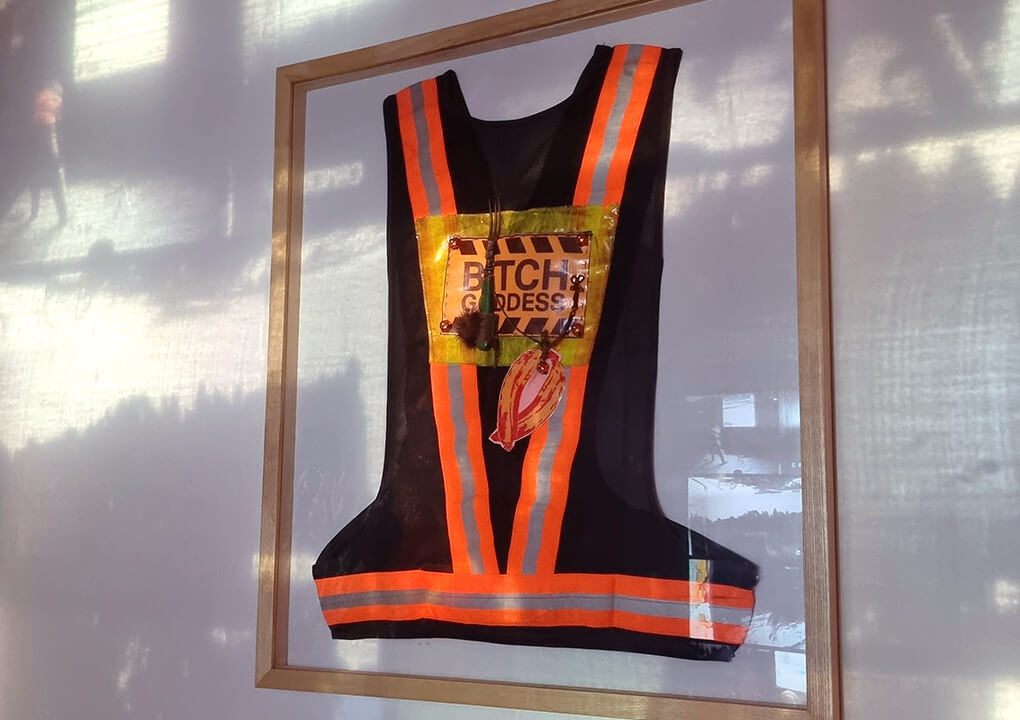
2019–2020 treats the safety vest as an archive of social instruction. The garment is marked with fragments, symbols, and embroidered language that shift it from civic uniform into charged surface. What should normally identify a worker becomes unstable, almost heraldic, as if ZhouKe’s role in the world has been compressed into a wearable code. The work carries the atmosphere of a moment when public space, surveillance, protest, and control began to collapse into one another with unusual force. The vest belongs to street maintenance, but it also resembles emergency gear, public warning, bureaucratic compliance, and protest visibility. Its brightness is practical, yet it also performs. Within the larger sculpture, this work establishes the vest as a non-verbal grammar. ZhouKe is not introduced through portraiture, but through function. She appears through what she is made to wear, what she is asked to do, and what the city recognizes before it recognizes a person.
2020
2020 focuses on stars, badges, and systems of external evaluation. The five-star symbol appears cute, almost decorative, yet it points toward a more monstrous logic of scoring, ranking, and social legibility. Judgment is miniaturized into something bright, wearable, and strangely appealing. This cutification of control is important. In the work, power does not always arrive as severity. It can arrive as a badge, a sticker, a reward, a rating, a soft graphic language that makes discipline appear friendly. The historical echo of forced identification through clothing remains present, but displaced into the language of points, stars, and public value. For ZhouKe, the star becomes a sign of how identity is measured from outside. A body is not only seen. It is assessed, marked, sorted, and made readable by invisible systems. The vest carries this contradiction beautifully: it protects the worker by making her visible, while also making her available to classification.
2021
2021 extends the vest into the territory of language. Phrases such as “Totally Uncreative Picnicking” emerge from an early language model trained on large datasets of English insults, producing strange combinations that feel comic, broken, and unexpectedly precise. The result resembles protest language after passing through censorship, machine generation, and mistranslation. The absurdity is not decorative. It shows how language mutates when direct speech becomes impossible, risky, automated, or surveilled. Under censorship, meaning often survives through detour. It becomes joke, code, error, pun, mistranslation, nonsense, or meme. The vest becomes a public surface for this mutation. In ZhouKe, protest is never presented as pure declaration. It is always entangled with performance, circulation, aesthetics, and systems of control. The embroidered language is funny, but the humour carries pressure. The words appear ridiculous because the conditions that produce them are not.