[ SYSTEM FILE: ABOUT ]

Identity as infrastructure

周珂 [ZhouKe] presents a single metaphysical sculpture distributed across objects, images, and networks. ZhouKe functions as a structural figure through which questions of identity, visibility, and agency are examined under contemporary conditions of technological mediation and surveillance. The work persists through recognition and transmission, shaped by how it is seen, shared, and remembered.
Distributed Sculpture
Identity is treated here as sculptural material. It is formed through repetition, projection, memory, role, interface, labor, and belief. ZhouKe is a figure, but the sculpture is produced through the encounter between viewer, image, object, system, and context. The physical elements activate a field in which the viewer assembles continuity, assigns presence, and participates in the formation of a cultural body.

The work approaches identity as something mediated, relational, and continually produced. A self appears through language, gesture, uniform, technology, social recognition, institutional framing, and accumulated memory. ZhouKe gives this condition a visible structure. She is neither psychological portrait nor fictional avatar. She is a constructed presence through which larger systems become perceptible, including surveillance, platform circulation, political language, gendered visibility, urban labor, and machine-generated authorship.
// MEANING emerges through relation
A single artwork composed of multiple instances unfolding across physical and digital space.

ZhouKe examines how identity stabilizes through repetition, framing, and shared belief.
The Mediated Self
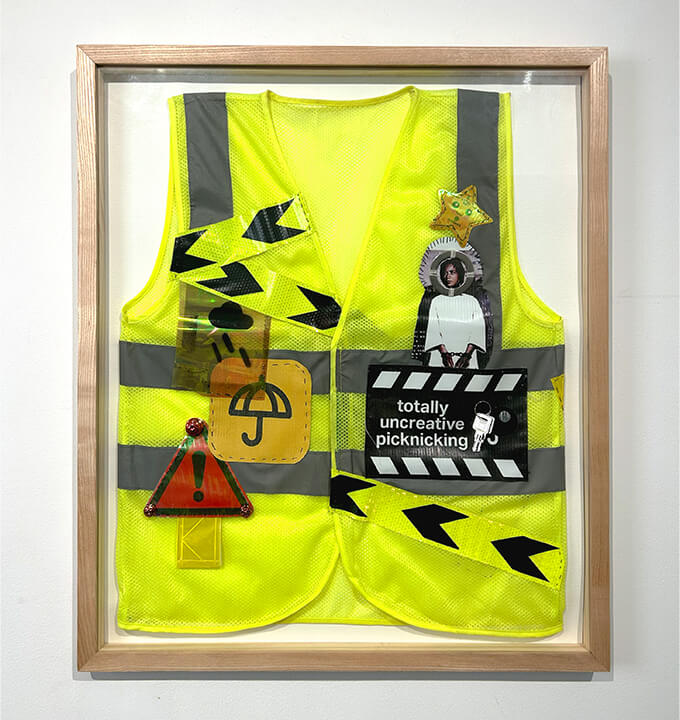
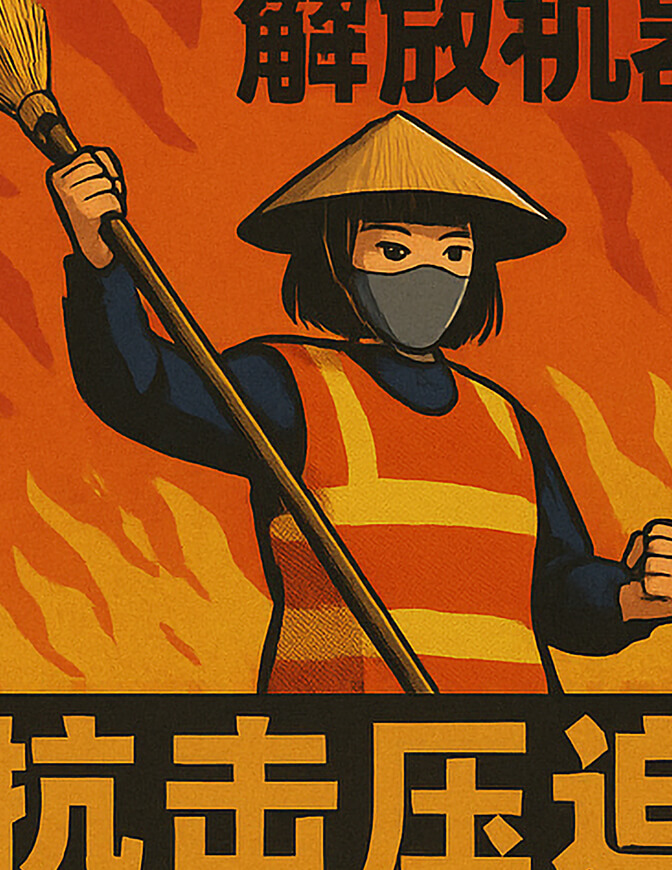
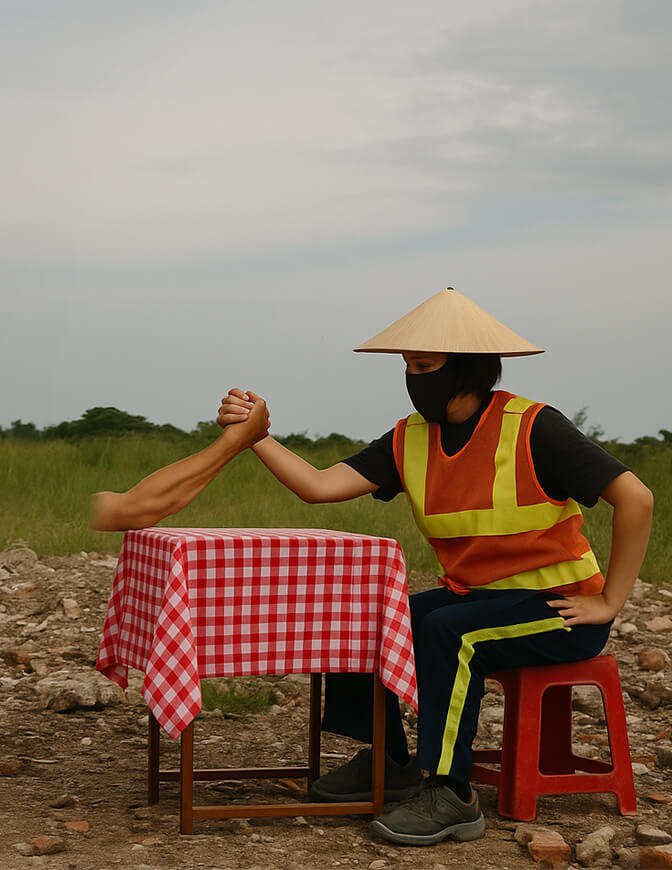
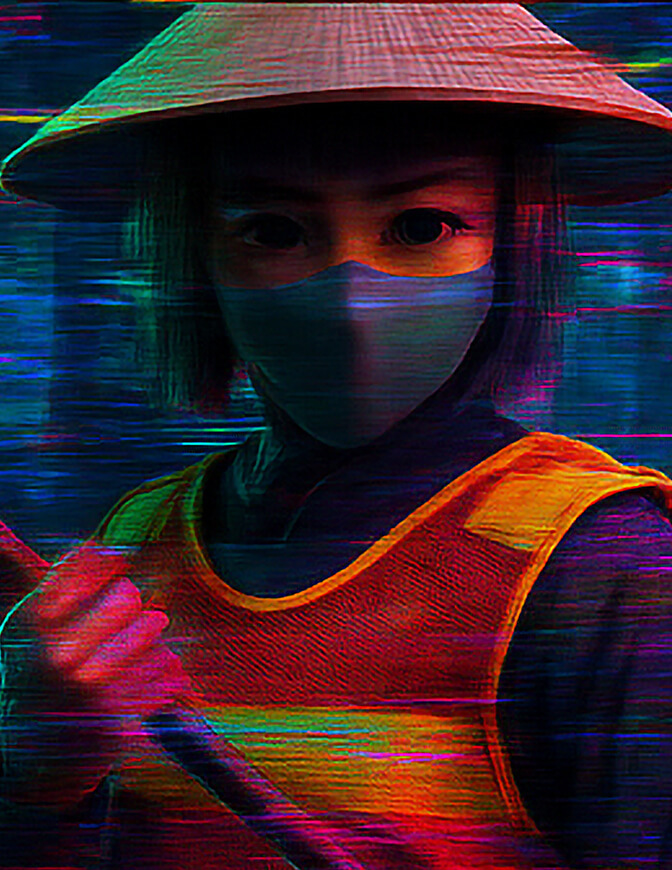
The street-cleaner uniform carries several forces at once: public labor, state function, urban maintenance, anonymity, and procedural repetition. ZhouKe appears as worker, civic instrument, witness, and automated presence. She is human, or almost human, but also bot-like in her repetitions, transmissions, and scripted visibility. Her online voice can seem deeply empathetic toward human suffering, while her protest language also raises the question of performance, aestheticization, and circulation. This ambiguity is central. Under networked conditions, identity arrives in medias res, already shaped by systems of display, recognition, censorship, and belief.
Circulation and Memory
The exhibition functions as a temporary configuration of a larger sculptural field. Video, hologram, garment, language, ink, badge, screen, bot, reflection, architecture, and network each operate as partial conditions of encounter. Meaning accumulates through intervals, echoes, substitutions, and acts of recognition. The sculpture comes into form as the viewer moves through it, remembers it, and carries its structure beyond the exhibition space.

ZhouKe extends through online systems, automated speech, open licensing, and blockchain records because these are now among the places where identity is produced, witnessed, copied, validated, and circulated. The work asks how a figure becomes real inside systems that precede and exceed her, and how an artwork might exist as a persistent structure of attention across physical and virtual territories. Its force lies in treating networked life as the condition through which form, agency, and memory now appear.
TOTALLY UNCREATIVE PICKNICKING
A metaphysical sculpture by Fred Farrow
@qiu_jin_ke
2025
@qiu_jin_ke
2024
@qiu_jin_ke
2023
@qiu_jin_ke
2024
@qiu_jin_ke
2024
@qiu_jin_ke
2025