// materials
8-channel video
// Date
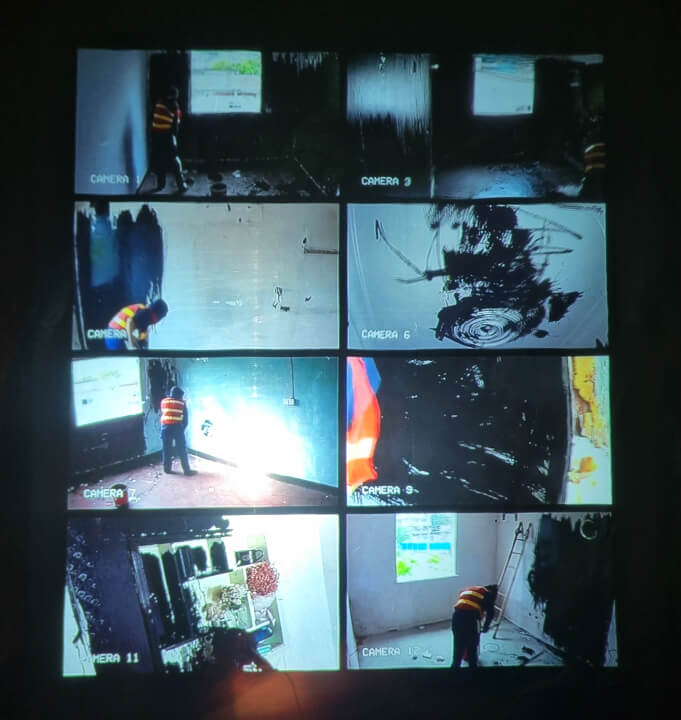
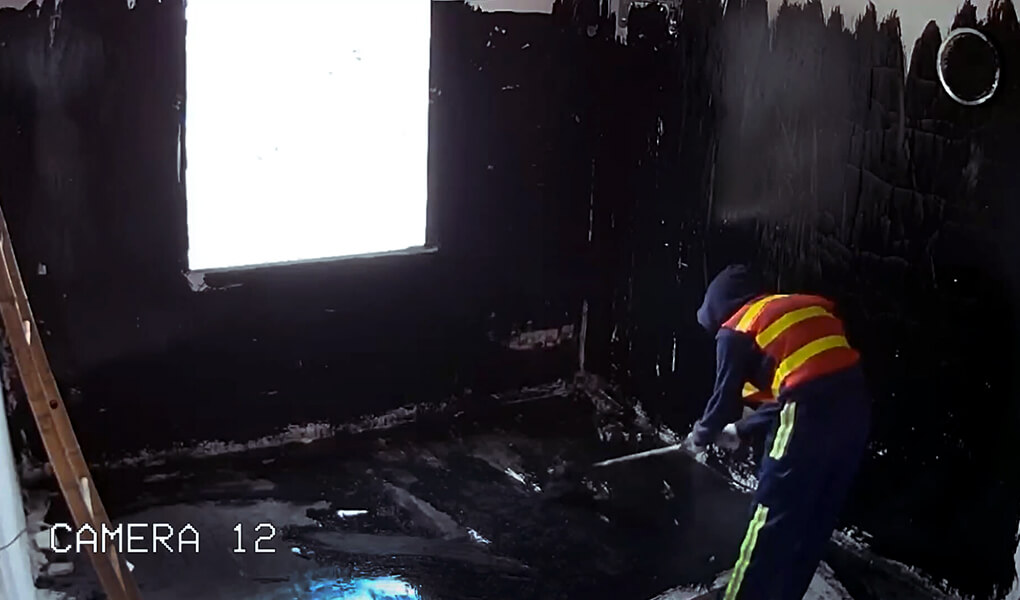
Black shows ZhouKe painting rooms with black ink while surveillance cameras record the action. The work turns ink wash, calligraphy, labour, censorship, and observation into a single monitored landscape.
Obscuration
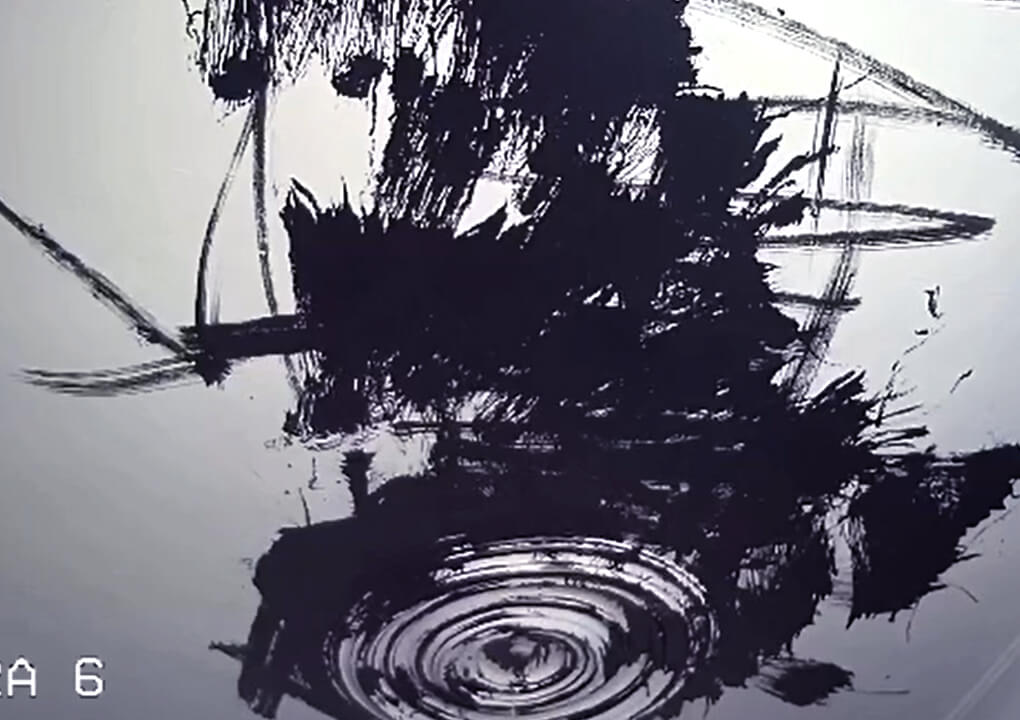
ZhouKe covers the walls with black, using a mop as a utilitarian brush. The action recalls ink wash painting and calligraphic gesture, yet it is performed as maintenance work, systematic and almost passionless. The room is transformed through brushwork, while drawings, furniture, and architectural details are obscured. Its large black gestures can call to mind Pierre Soulages or Franz Kline, yet the action remains utilitarian, procedural, and unsentimental. The act is both making and unmaking.
Frame
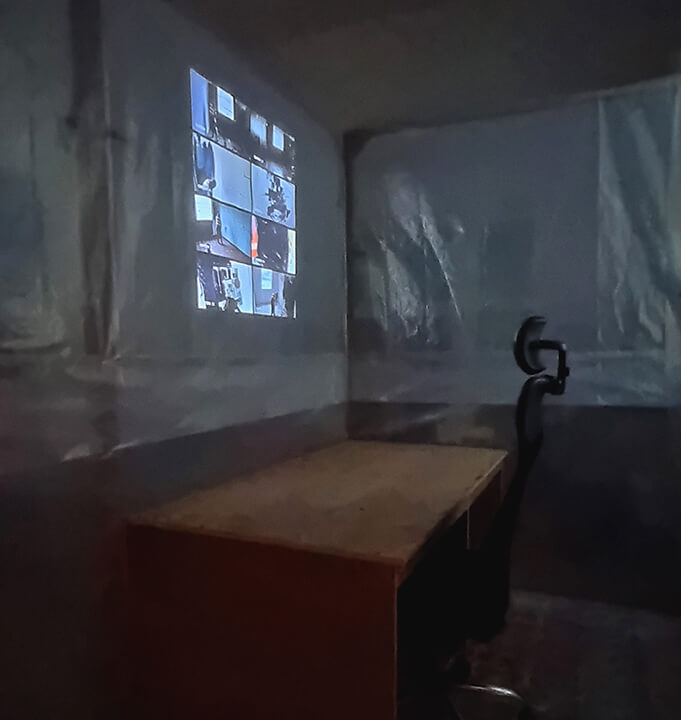
The footage is captured through fixed surveillance cameras and presented across multiple channels. The viewer sees the work through the same apparatus that records it. The stacked frames resemble a cut-through of an urban block, a contemporary landscape built from rooms, cameras, and partial views. The randomness of the loops prevents total mastery. One watches, yet never possesses the scene.
Wu Wei
The work draws on the tension between action and non-action associated with Laozi thought and Chinese landscape traditions. As François Jullien describes in relation to Chinese painting, form emerges through process, breath, interval, and transformation rather than fixed objecthood. Black carries this logic into surveillance space. The eye moves through the image as part of the landscape, unable to stand outside it.